
Pharma Lab IT and Digital Transformation Trends for 2026
Pharmaceutical laboratories continuously evolve to improve operational efficiency, address challenges, respond to demand, and remain competitive. As 2025 draws to a close, what areas are we likely to see prioritized over the coming year and beyond?
In this blog, we are going to look at the key pharma lab IT and digital transformation trends for 2026. Those trends cover technology, people, process, and compliance.
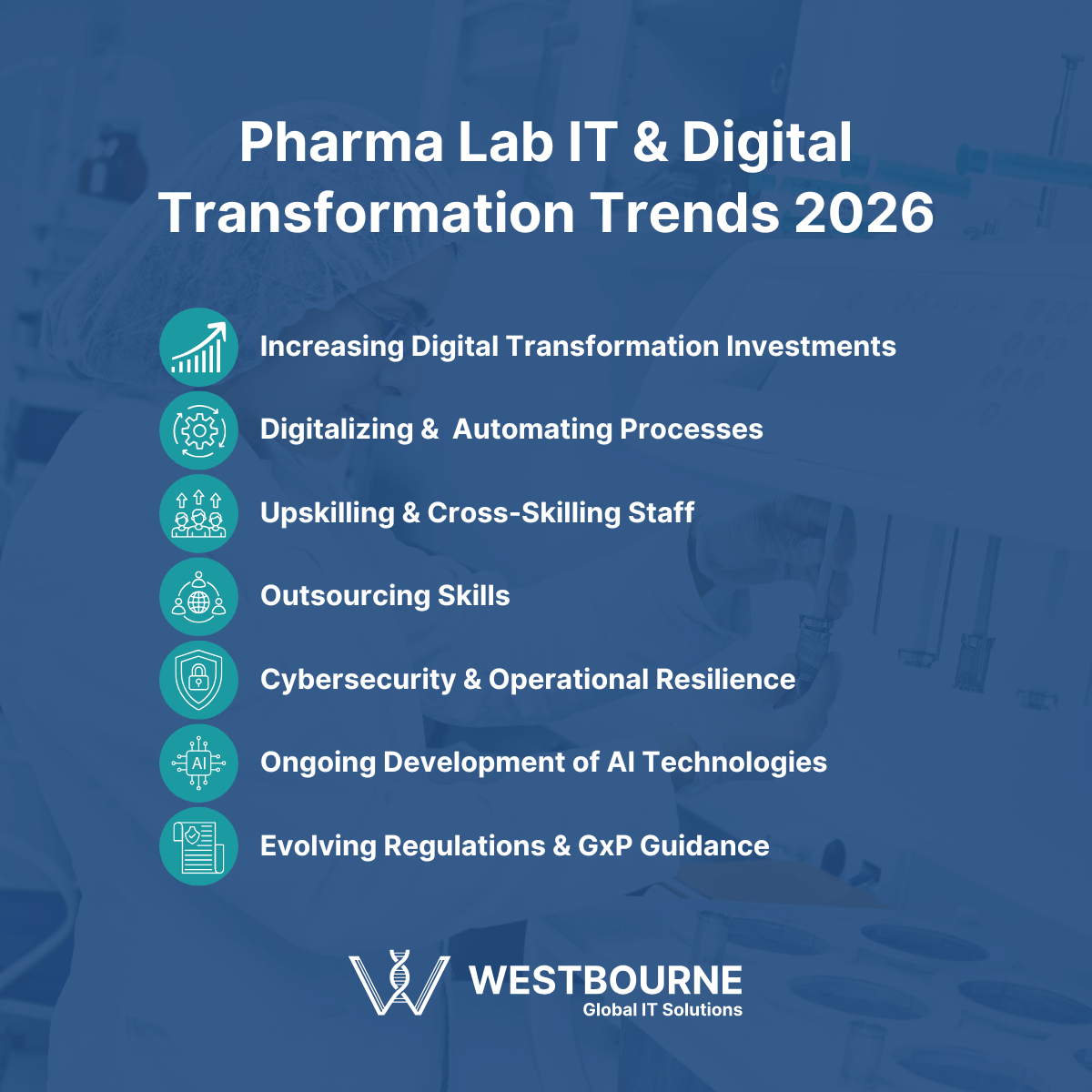
Increasing Digital Transformation Investments
Digital transformation in pharma laboratories is no longer a concept that can be put off until sometime in the future. Most pharma labs have made some progress, but further evolution in digital maturity is essential for continued competitiveness (and, increasingly, compliance).
As a result, we are likely to see increasing digital transformation investments over the coming years.
Digitalizing and Automating Processes
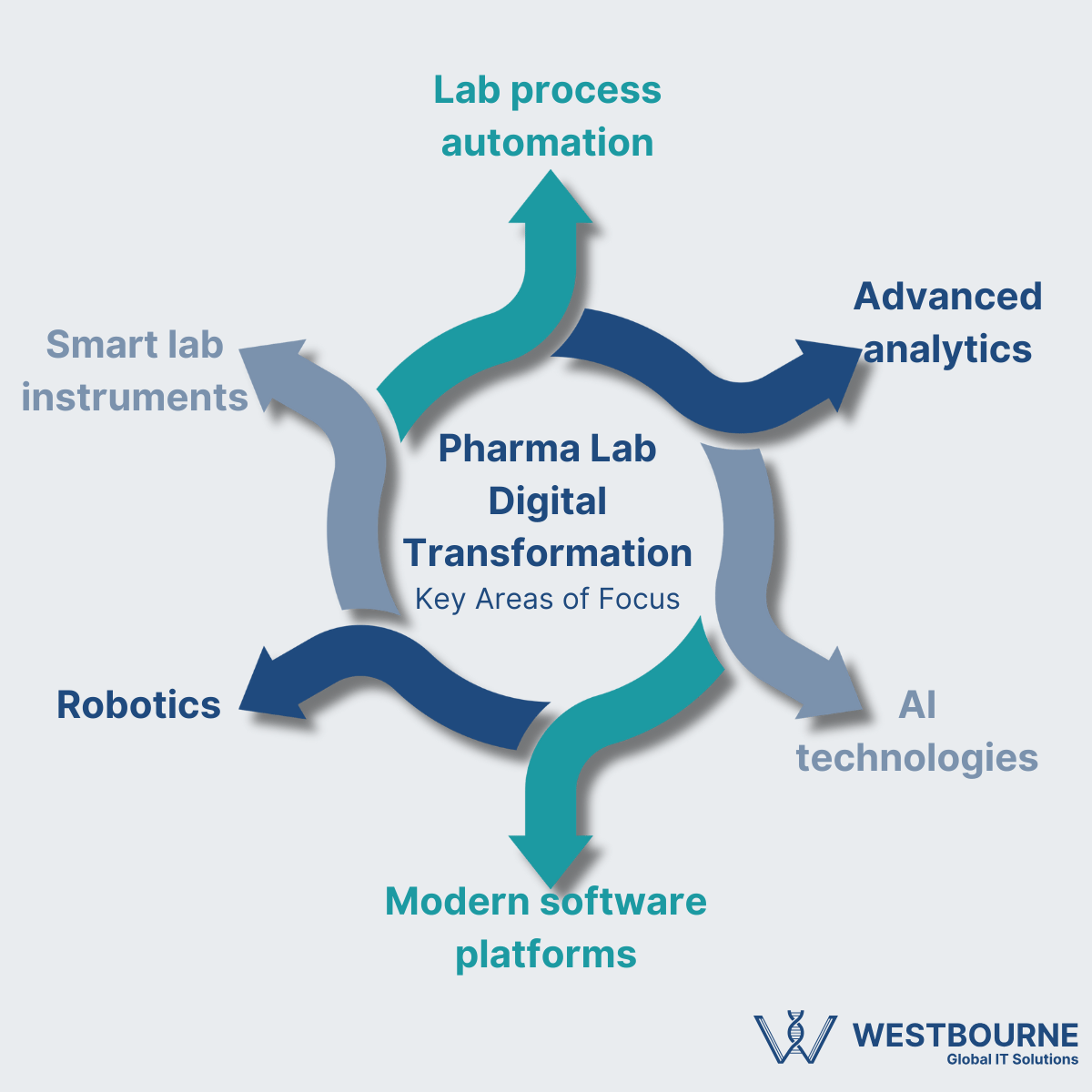
Following on from the point above, a lot of the investments that will be made in pharma lab digital transformation projects will be to automate or partially automate operational tasks.
There are existing operational and commercial drivers for this push to digitalize and automate processes. Innovations such as the growth of personalized medicines are making the need for digitalized and automated laboratory operations even more important.
Upskilling and Cross-Skilling Staff
The increased (and increasing) use of technologies in pharmaceutical laboratories means there is a growing need for companies to enhance the technical and IT skills of their lab resources. Having a solid scientific foundation is still essential, but advanced IT and technical skills are also crucial to maximize the potential of a digitalized laboratory.
At Westbourne, we have considerable experience in this area in both directions. This includes developing the scientific skills of our technical resources as well as the technical skills of our scientific resources. The enhanced skills of our team add considerable value to our customers, whether supporting day-to-day operations or large-scale projects.
Outsourcing Skills
Connected to the point above is the fact that it is not always easy, effective, or cost-efficient to recruit pharma lab resources who have the necessary balance of scientific and technical skills. Outsourcing is an alternative solution, where you work with a trusted partner to provide you with the skilled resources you need.
The trends highlighted so far in this blog have a cascading effect, i.e., increased investments in digital transformation initiatives lead to an increase in the digitalization and automation of processes, which in turn enhances the requirement to have resources with both scientific and technical/IT skills. Outsourcing, when it makes sense, is the next logical step.
Cybersecurity and Operational Resilience
There have been many incidents throughout 2025 where major corporations have suffered from cybersecurity attacks. There have also been a series of outages at companies that many businesses now rely on, including pharmaceutical businesses. Outages at the major cloud service providers AWS and Microsoft Azure in October 2025 are two examples.
Cybersecurity and operational resilience have to be a top priority in pharmaceutical organizations, but recent incidents have shown the importance of not only continued vigilance, but continuous testing and improvement. Therefore, beefing up cybersecurity and building more robust operational resilience will be key focus areas for pharmaceutical laboratories in 2026.
Ongoing Development of AI Technologies
Any technology-related trends list for 2026 in any industry will include a mention of AI, and this one is no different. But there is a big difference in terms of the introduction of AI technologies in the pharmaceutical industry and the introduction of AI technologies in other industries, especially if that introduction involves GxP critical processes.
Throughout 2026 and beyond, we expect to see further development of AI technologies that are specifically suitable for GxP applications in the pharmaceutical industry. Aligned with this will be the development of best practices, guardrails, and guidance on the safe and compliant use of AI in the pharmaceutical industry.
Evolving Regulations and GxP Guidance
AI isn’t the only area where regulatory and GxP guidance will continue to evolve in the coming year and beyond. New drug innovations, the faster pace of drug development, and market pressures are examples of areas where GxP guidance and regulations will continue to change and develop. Pharmaceutical laboratories will need to adapt to these changes.
Exciting Period of Change
This is an exciting period of change in the pharmaceutical industry as innovations in science and technology bring novel and ground-breaking treatments to a wider range of people. Pharmaceutical laboratories will be at the centre of those innovations, from R&D to manufacturing and quality control.
At Westbourne, we can support both your existing operations and your digital transformation journey. Our expertise as a pharma lab IT support provider means we have the skills and experience to help optimize your operations and achieve your goals. Get in touch to arrange a consultation via the contact page on our website or you can email me directly at john@westbourneit.com.
Latest Insights

Blended IT, OT, and Scientific Expertise – a Unique Value Proposition
Laboratory operations in life sciences sector companies require support from specialist vendors at various times and for various reasons. You might need medium-to-long-term scalable and flexible support to augment your existing team, for example, or you might need...
PODCAST: The Importance of Roadmaps to Digital Transformation Success in the Pharmaceutical Industry
In this episode of the Westbourne podcast, David Tucker, IT Program Manager at Westbourne, explains the critical role...
Validating AI Technologies in Pharma Labs & Manufacturing Facilities
The role of AI (artificial intelligence) as an emerging field of technology arguably carries greater risks in the...
The Benefits of On-Site IT Support
On-site IT support involves experienced engineers operating within your facility rather than remotely. They can...
PODCAST: Building a Unique Lab IT Solution Provider – a Westbourne Story
In the first ever Westbourne podcast, we do a Q&A with Westbourne Founder and CEO, John O’Sullivan. The topics...